
Don Quixote’s Mind Between Reason and Delusion
Don QuixoteThis thread traces how Don Quixote reasons lucidly outside chivalry, repeatedly reinterprets reality, and finally recovers his sanity.
increasing Bearing strength in each event
 decreasing
Bearing strength in each eventdecreasingBooks Reconfigure Reality
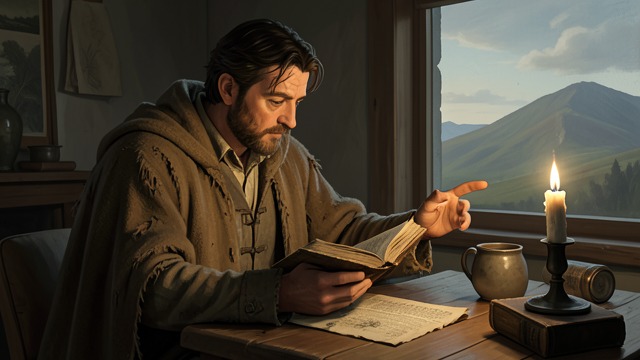
Books Reconfigure Reality
Imagination takes command
Don Quixote reads romances until he believes their customs are historical truth. He recasts himself as a knight-errant and turns ordinary surroundings into adventures.
A divided mind
His delusion is focused on chivalry; outside it, he can speak with judgment and learning. That contrast defines his unusual condition.
Reality Recast as Enchantment
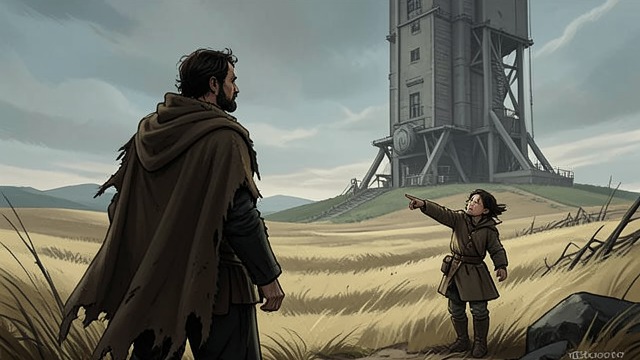
Reality Recast as Enchantment
Failures explained away
Windmills become giants and sheep become armies; defeats are attributed to the enchanter Friston. This protects Don Quixote's imagined vocation from contradiction.
Sancho's testimony resisted
Sancho repeatedly reports what he sees, yet Don Quixote treats the discrepancy as further evidence of magic.
Lucidity Outside Chivalry
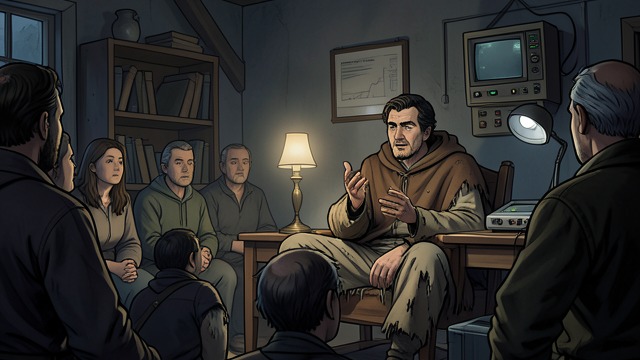
Lucidity Outside Chivalry
Reasoned discourse
Don Quixote offers coherent arguments about arms, letters, peace, poetry, and justice. Those who hear him are struck by the clarity of his thinking.
A bounded delusion
His reason collapses when chivalry is invoked. The novel presents madness and wisdom as coexisting rather than mutually exclusive.
Defeat Ends the Quest
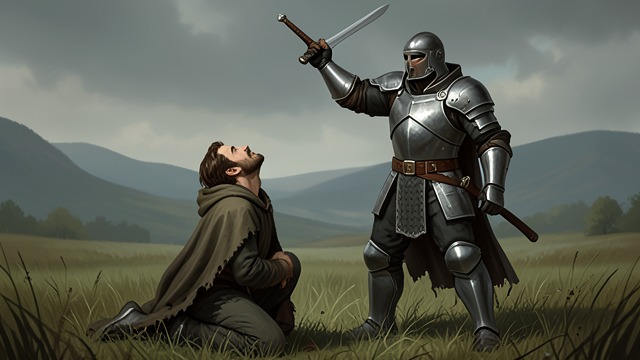
Defeat Ends the Quest
A binding condition
The Knight of the White Moon defeats Don Quixote and requires him to retire to his village for a year. Don Quixote accepts the terms.
The pastoral substitute
He plans a shepherd's life during retirement, showing how thoroughly chivalric patterns still shape his imagination even after defeat.
The Good Man Returns
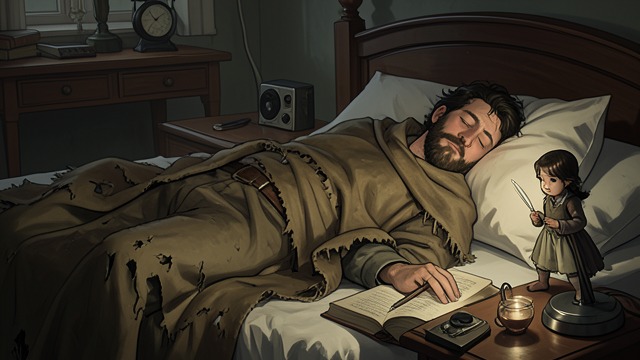
The Good Man Returns
A sudden recognition
After illness, Don Quixote rejects the romances that governed his life and identifies himself as Alonso Quixano the Good. His change surprises his friends.
Death and closure
He makes a Christian will and dies in bed. The narrator closes the possibility of further adventures by declaring the knight's story complete.
Before his first sally
During the second sally
During the inn and roadside discussions
After the duel at Barcelona
In the final chapter
